In college, things move fast, ideas run deep, and the sheer volume of information can feel overwhelming to anyone. Many students quickly realize that the passive writing habits used in high school don't quite cut it in university lecture halls, and it is easy to fall behind in keeping up with everything they need to learn.
When taking notes, they shouldn't just be a transcript of what the professor said; they should be your ultimate, personalized study tool. Effective note-taking should be an active, multi-step process that transforms raw information into long-term understanding.
Whether you prefer a laptop, a tablet, or a classic paper notebook, this guide is intended to help you build a note-taking system that works for you, so your notes are helpful when you need them.
- It is the documenting of key information.
- It should be an engaging process.
- It should be concise.
- To help identify key information.
- To improve comprehension.
- To recall that information later.
Outline “Streamline” Method
- It is an efficient way to keep your notes well-categorized and organized.
- Notes are straightforward/streamlined and easier to read.
- Make sure to use indentations to keep things clear.
- Typing them versus handwriting will allow you to add additional notes later and search for information using keywords, but handwriting can help with retention.
- Tailor and develop your own method of outlined notes.
- Different subjects may require you to adjust how you use this method.
Title (Date)
Heading
- Main topic
- Subtopic
- Key point
- Another subtopic
- Key point
- Another key point
- More key points...
- Subtopic
- Another main topic
- And so forth.
Heading 2
- And so forth.
Read before the lecture.
- It introduces you to the content before your professor discusses it.
- It helps to identify the key lecture points your professor will discuss during class.
- It will help you focus your notes and questions on things you do not know or understand.
- If you have an e-book/text, utilize the text-to-speech by having your device read to you as you follow along.
Review and organize materials.
- Start an outline from the reading, going section by section, even if you don’t take any notes on the section. (These will become your notes, which you will continue in class, allowing you to focus on documenting what you may have missed or need to add.)
- Review the textbook questions at the beginning and/or end of each chapter, and key terms before beginning to read.
- Put them in your outline. They will help you focus on the key information and concepts in the chapter.
- Pull text, page numbers, sources, and examples from the textbook or article to answer these questions.
- Cross-reference information you have already documented in your outline from the lecture by highlighting or underlining it in a specific color. (There is a good possibility this information will come up in an exam or be needed for another assignment.)
- Save your notes in one place.
- Take notes using Word and store them in OneDrive.
- Organize notes into a folder by course subject.
- Keep one subject in one document and be sure to title and date each day for reference. (This will help avoid having to open multiple files to find what you need.)
Put any unnecessary distractions away.
- Set your smart devices to “Do Not Disturb” and place them face down or in your backpack.
- Get a fidget toy to help with stimming; something that still will not distract you from listening to the lecture and taking notes.
Get plenty of rest.
- It’s never easy when you're taking classes, going to work, and managing other responsibilities, but listening to lectures and taking notes when you're tired is particularly hard, especially when you're trying to stay focused and keep your eyes open. So do your best to set specific times to go to bed or to take a nap.
Schedule your time.
- You won’t always be able to stick to it; things come up and change, but planning and scheduling your time using a planner regarding things you should be doing or where you should be will help manage the things you need to do.
- If something changes, update your planner, and prioritize what you can and cannot be flexible on.
- Be prepared to say, “No, I have to study/get some rest.” It ok to say “No” to focus on your priorities.
Listen actively.
- Focus on understanding the topic being discussed rather than trying to write down everything you hear/see.
- If you're only trying to write down everything you hear/see, there's a good chance you are not engaging with the lecture and how it compares to the reading and the outline you already made.
- Focus on the discussion.
- Listening for information you already included in your outline (to highlight) or things you need to add.
- Avoid writing word-for-word. Your notes should be concise and serve as a reference.
Ask questions.
- Odds are you are not the only one with the same or a similar question, and having these questions answered is important to your understanding of the content.
- Write it down and ask when appropriate.
- Ask questions when your professor gives the opportunity. If they don’t, try to squeeze it in somewhere, or send it to them on Canvas after class.
Engage in discussions.
- Not always the easiest thing to do, but doing so will improve your comprehension and articulation of the information. Meaning that being able to talk about it now will make it easier to recall and discuss the information later.
- This is also a good way to engage with your professor and build rapport.
- Professors usually appreciate when you are engaging with them and the class by participating and asking questions.
- Additionally, if you find yourself in a situation where you need a little extra support, they are usually more inclined to remember and work with you. (It’s usually the students who are frequently absent, do not participate, and do not do the work that your professor is likely to be less flexible with.)
- Topics from these discussions may also come up again in an exam or be relevant to another assignment.
- Take advantage of your professor’s office hours to ask questions, even if it's just one time to say hello and introduce yourself. Doing so helps in building that rapport if you need help in the future.
Use your notes.
- Review, add, and elaborate on anything you may have learned in the lecture.
- Turn them into flash cards to help you study.
- There are free apps available that can help with this, and sometimes other users make their flashcards public for the very class you are enrolled in.
- Refer to them for assignments, study guides, and use them if you have an open notes exam.
- Find people in your classes who are also taking notes that you can introduce yourself to and ask if they would like to share and compare notes.
- This will also be helpful if you or they are absent.
Things to Document in Your Notes:
- Key concepts
- Cases and other examples
- References for sources
- Important terms and definitions
- Information repeated or emphasized
- Illustrations, charts, or diagrams
Helpful Note-taking Tools
- Microsoft Word and OneNote
- Smart Pens
- Scanner, note-taking, speech-to-text, and flashcard apps
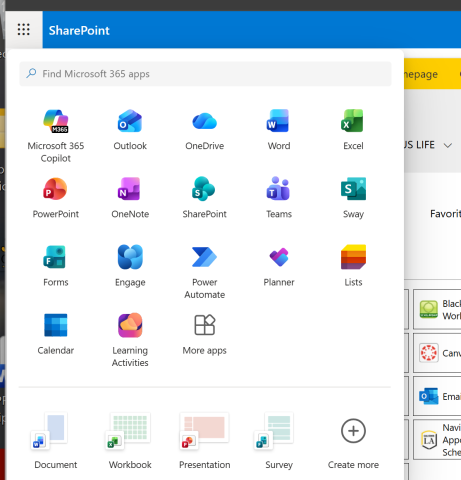
MyCalStateLA App Launcher
- You can access all Microsoft applications provided by the University via the MyCalStateLA portal for free!
- You can also download these applications and log in with your university credentials.
LinkedIn Learning
Note Taking, Studying, and Time Management Strategies - videos on note-taking, studying, and time management strategies.