Get To Know Professor Krinsky
Tell us a little about your teaching at Cal State LA—how long you’ve been here, what department you’re part of, and the courses and students you work with.
I started teaching at Cal State LA in the Fall of 2015 in the Math Department. I’ve taught most of the lower-division course as a lecturer including the entire Precalculus and Calculus Sequence, all our quantitative reasoning GE courses, Linear Algebra and the History of Mathematics. I work primarily with first- and second-year students.
What drew you to teaching, and what do you enjoy most about teaching Cal State LA students?
I come from a long line of teachers including my mother, who was a faculty member in Mathematics at CSUDH and my great-aunt. I saw both of these incredible women make a huge difference in the lives of many students and was drawn to making that kind of impact on others. The thing I enjoy most about teaching Cal State LA students is seeing how the relationships I build with them and the skills I help them grow make such an impact not only on them but on the communities to which they contribute. Mathematical thinking and critical thinking are some of the most important skills a student can learn here that will impact them across all the dimensions of their careers and lives.
Can you share a moment in your teaching—perhaps an “aha” moment when you saw learning click for a student, or an especially positive experience you shared with a student or class—that has stayed with you?
My main focus for the last 10 years has been critically examining the way we grade students, the ways grades impact their learning and confidence, and what barriers stand in the way of instructors and students building long-lasting, impactful relationships. Switching to standards-based grading has enabled me to have “aha” moments with many more students, many more times during each semester. Changing the way we grade can open students up to truly focusing on their learning. I get to talk about one of my favorite subjects, math, and students get to relax and feel free to try, make mistakes, and try again without significant penalty.

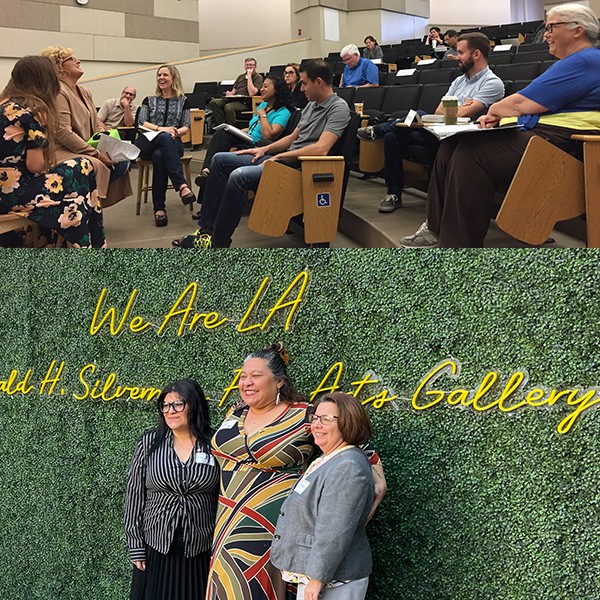
Alternative Grading Math Faculty from various institutions at the 2024 MAA Mathfest Conference.
Tell us about the teaching practice you’re sharing. Where do you use it, and what does it look like from a student’s perspective?
I use alternative grading practices based on four fundamental pillars: 1) Clearly defined, actionable, measurable learning outcomes, 2) Feedback loops, 3) Marks that indicate progress on the learning outcomes, and 4) Eventual proficiency is what counts towards the grade.
Over the 10 years that I have been practicing and teaching about alternative grading practices I’ve come to realize the degree to which: 1) Grades completely permeate the course and student experience, 2) Traditional weighted average grades are the biggest barrier to learning and student motivation, 3) Alternative grading practices can provide space for learning, 4) Changing my grading practices has increased the effectiveness of the other pedagogical methods I use including: active learning, career engagement practices, and culturally relevant practices.
From a student’s perspective, having the opportunity to try multiple times (but not infinitely many times) to demonstrate that they have learned a particular learning outcome enables them to engage in productive struggle without the stress of permanently damaging their final grade. They have more opportunity to take risks, try something difficult, and truly engage in learning the material. They also become better learners by the built-in reflection on their own mistakes that is part of the feedback loop process.
Alternative grading is a model that is the accumulation of evidence throughout the term, supporting the idea of growth and persistence. In traditional grading, the mathematics tends to be one of deficit – where each poor performance drags the grade down further. Given the built-in skew towards failure of the mathematics of traditional weighted average grades, students spend most of the semester trying not to let their grades “slip”.
What led you to try this practice? Was there a learning goal, student need, or teaching challenge you were trying to address?
I was frustrated that despite trying all the “best” teaching practices, nothing seemed to be helping me connect with my students the way I wanted to. I was searching for active learning materials for a course that was new to me when I stumbled across alternative grading practices and thought it could help me deepen my effectiveness as a teacher.
How does this practice make learning more student-centered?
Alternative grading practices have at their core the idea that the end-of-term grade should be a final report on what the student has learned. Since the grade is computed by accumulating evidence of learning, the entire focus by both a faculty member and the student on what the student has learned. So the student’s learning is at the very heart of the entire grading structure.
What have you noticed about how students respond to the practice or what they get out of it?
When done with intentionality and authenticity, many students respond extremely positively to alternative grading. Especially students who have traditionally struggled in mathematics, the opportunity to actually fill gaps in background knowledge and make the connections with new mathematics and have those count towards the grade that is their primary extrinsic motivation is freeing and fulfilling to many students. It allows an instructor to provide a customized path towards the student’s goal without the workload of creating entire one-on-one pathways for each student.
Most students report that they have learned a lot more from classes that use alternative grading, while working harder and getting better final grades.
How do you think this practice prepares students for what comes next, whether that’s the workplace, graduate school, or another path?
Alternative grading practices are intentionally designed to leverage what we know about how students learn and to follow procedures that are common in the workplace and graduate school. Feedback loops consisting of turning in a piece of work to a supervisor or fellow team member, getting feedback, revising that work and then finalizing that work is at the heart of every workplace and graduate school path. Graduate schools that focus on careers with licensing such as medicine, law and engineering are adopting practices such as these. Changing our grading has an opportunity to come into better alignment with how the world works outside of school, as well as focusing instructor attention on intentionally teaching not just facts but also the various skills needed for a competent graduate.
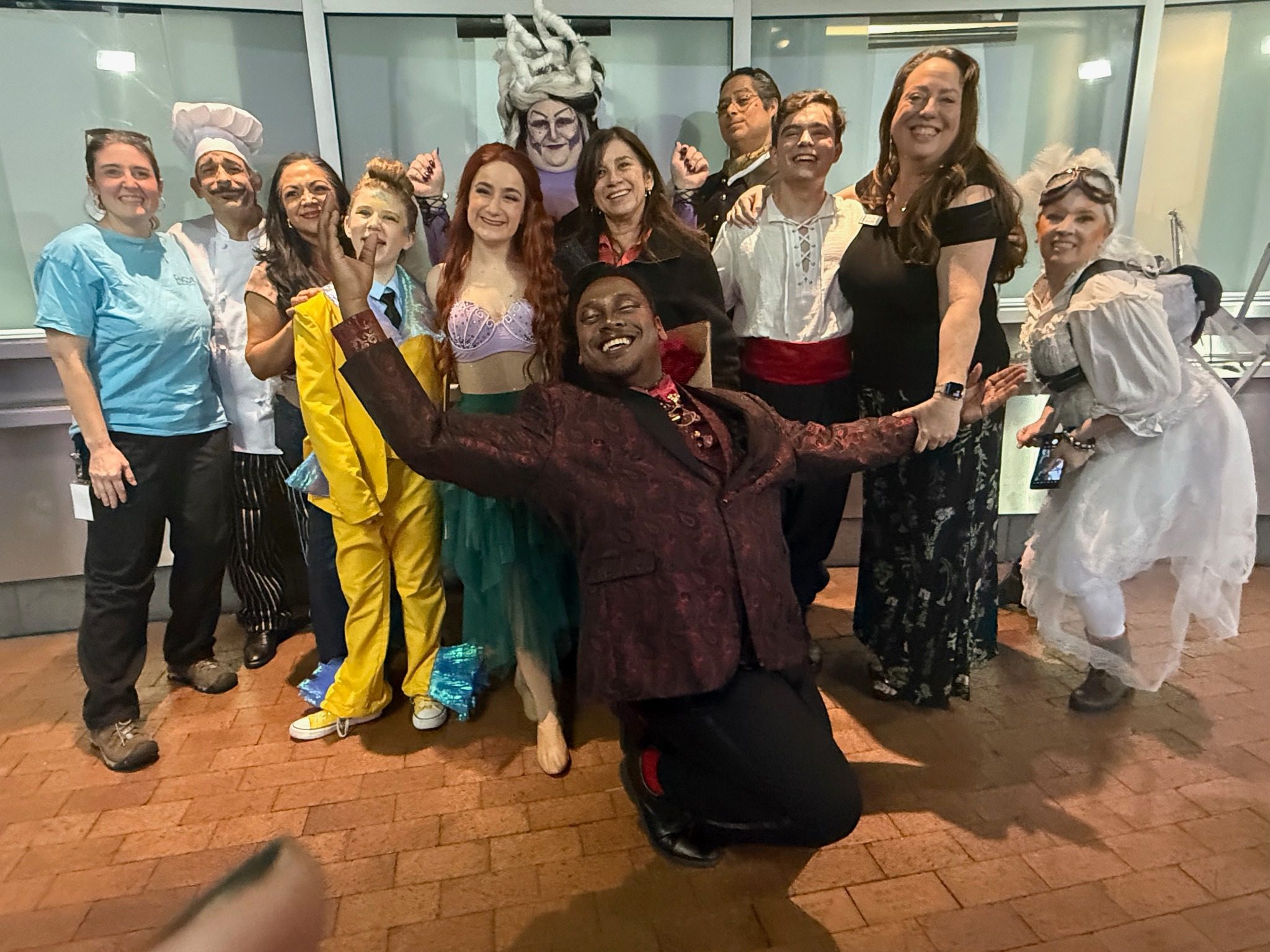
The Cast and Executive Staff of Encore Theatre Group’s production of Disney’s Little Mermaid, Sharona (Executive Producer) with her son Aaron (playing the character of Prince Eric) (www.EncoreSouthBay.org)
If a colleague wanted to adapt this practice, what would you want them to know, and where should they start?
There are communities of practice around alternative grading that have come into existence over the last 10 years. Changing your grading practices is important but can be overwhelming. I would want anyone who wants to make this change to get connected with training and resources. Learn the background literature, read the books, and get a coach. Organizations such as The Center for Grading Reform are a good place to start, as is CETL. You can also reach out to your national professional organizations, many of them are supporting these efforts. There are also books, blogs, and podcasts to help.
What do you hope sharing this practice adds to conversations about teaching at Cal State LA?
As we confront the changing landscape of higher education, there is an opportunity at Cal State LA to have a robust conversation about grades as a community. What are the purposes of grades? How can we leverage them to improve student learning? How do we use grades to focus our courses and our students on the skills they will need in the future as we currently see it? Cal State LA has an opportunity to become a leader in transforming institutions to stay relevant in the coming years
What do you enjoy doing when you’re not teaching?
When I’m not teaching or doing professional development about alternative grading, I produce live stage musicals and plays. I’m currently the Executive Producer for an educational theater company in Torrance, Encore Theatre Group, and I am working on a project to produce an off-broadway play in 2027 or 2028.