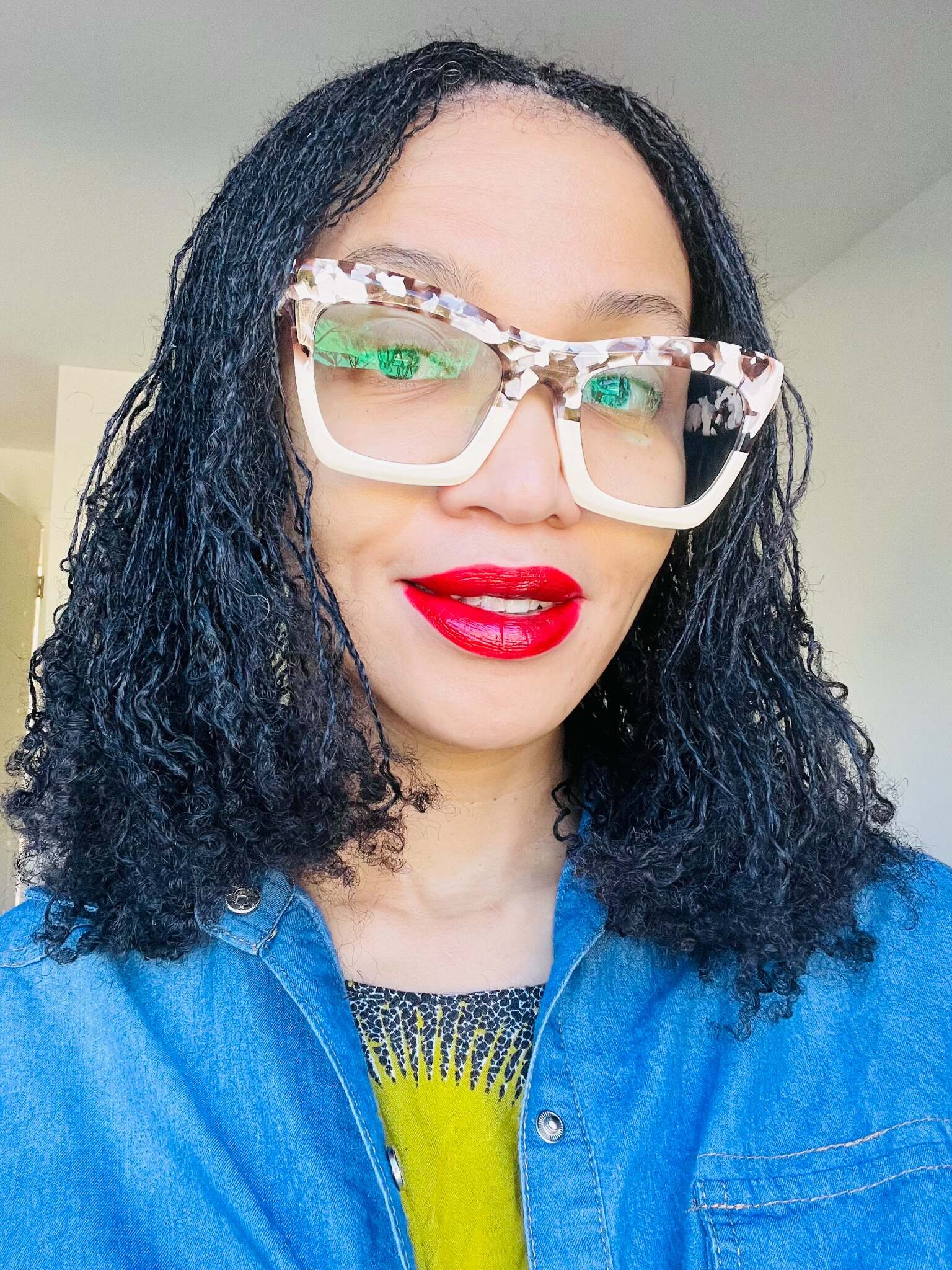
Dr. Parker has been at Cal State LA since 2016. She is a faculty member in the Department of Political Science, with a main appointment with the department’s Masters of Public Administration program. Dr. Parker has taught both undergraduate and graduate students. For undergraduate students, she has taught Intro to Political Science, Intro to Public Administration, Science and Technology Policy, and the Research Capstone. For graduate students, she has also taught the Intro to Public Administration course, Intergovernmental and Cross Sectoral Collaboration, and Human Resource Management in the Public Sector.
Get To Know Dr. Parker
Tell us a little about your teaching at Cal State LA—how long you’ve been here, what department you’re part of, and the courses and students you work with.
I’ve been at Cal State LA since 2016, which is 10 years now! I’m a faculty member in the Dept of Political Science, but my main appointment is with the department’s Masters of Public Administration program. I’ve taught both undergraduate and graduate students. For undergrad, I have taught Intro to Political Science, Intro to Public Administration, Science and Technology Policy, and the Research Capstone. For graduate students, I’ve also taught the Intro to Public Administration course, Intergovernmental and Cross Sectoral Collaboration, and Human Resource Management in the Public Sector.
Aside from teaching students directly, I have also engaged with students through two groups I co-founded: the Civic and Social Innovation Group and LA Economic Accelerator and Fellowship—both of which support student’s professional and academic growth through community engagement.What drew you to teaching, and what do you enjoy most about teaching Cal State LA students?
I’ve always thought teaching was a sacred practice, so it definitely intimidated me because teachers can wield so much influence in shaping someone’s mindset and pursuit of knowledge. To some extent, it still does intimidate me—especially as the landscape of education and student’s needs change as well. However, it is rewarding and enjoyable when a student has “aha” moments and I’m able to share information that they were not previously exposed to.
Can you share a moment in your teaching—perhaps an “aha” moment when you saw learning click for a student, or an especially positive experience you shared with a student or class—that has stayed with you?
When I teach the undergraduate Intro to Political Science course, I give students an assignment requiring them to explore job positions in government that are connected to their major. Because this is a general education course, there’s a variety of majors represented in class. As a result of this exercise, most students have ‘aha’ moments realizing that government work is very complex and interdisciplinary. It had never occurred to many of them that their majors would be relevant in a public service context. It gives them a different appreciation for public service work, an awareness of what it takes for a government agency to run, and a potential career pathway for them to explore.
Tell us about the teaching practice you’re sharing. Where do you use it, and what does it look like from a student’s perspective?
It’s a resource page on my Canvas called “The Art and Science of Asking for Help” where I highlight the value of asking for help and how to do it effectively. It has my own insights where I explain why asking for help is critical for professional and personal success, and I also include several videos of TedTalks with other professionals sharing their personal experiences with developing that habit and even a scientist who studies the subject. Some of my students have shared that the resource demystifies the narrative that asking for help is a weakness.
What led you to try this practice? Was there a learning goal, student need, or teaching challenge you were trying to address?
I had always told students that becoming self-guided learners is important, but that I’m always around to support them and they could come to me for help. However, I repeatedly noticed that a lot of them wouldn’t ask for help until it was very late in the semester or an assignment was due. I also noticed that many students seemed apologetic about asking for help. This prompted me to inquire of them why they were engaging in these behaviors. A common response was being nervous or not wanting to seem weak or incapable. Thus, I thought taking a deep dive into the process of asking for help and trying to dismantle harmful narratives about it was worthwhile.
How does this practice make learning more student-centered?
Personally, I think it acknowledges a serious student barrier rather than glossing over it and provides a way to overcome a habit that can have serious consequences beyond the classroom.
What have you noticed about how students respond to the practice or what they get out of it?
I sense students feel relieved when they hear very intentional messages about the value of asking for help. It also shifts their demeanor in class—namely they’re more inclined to engage more.
How do you think this practice prepares students for what comes next, whether that’s the workplace, graduate school, or another path?
I remember a specific class session for my undergraduate intro to public administration course where I talked about how asking for help as a professional in government and non profits actually makes public service better. Once I contextualized the practice as a way to improve your professional productivity, enhance efficiency and better advocate for the people you serve, a light bulb went off for the students. Being able to explain that bridge between asking for help in the classroom to life in the workplace is vital.
If a colleague wanted to adapt this practice, what would you want them to know, and where should they start?
As with anything in teaching, this takes repetition and consistent reinforcement! One way to do this is to actually require asking for help (or even questions) as part of assignments. It can facilitate breaking habits and mindsets that prevent students from asking for support or fostering their own curiosity. Also, starting with deeper conversations and inquiring from students their challenges with asking for help can help you pin point a specific strategy to support them. For example, some students may have had previous bad experiences as a result of approaching another teacher (or other authority figure) for help. If a student apologizes for seeking your help, be very explicit that apologies are not necessary and you’re happy to support! I also reinforce asking for help and being curious by consistently saying in class that it's ok not to know something because we’re all here to learn.
What do you hope sharing this practice adds to conversations about teaching at Cal State LA?
I hope that this surfaces how asking for help needs to be more normalized and embedded in a student’s learning experience. I also hope it prompts us to have deeper engagement with students that can not only alleviate challenges with help-seeking but also build a habit of being curious. I also hope it can generate more ideas for developing a sense of belonging and inclusion among students.

What do you enjoy doing when you’re not teaching?
I’ve recently started getting into weight lifting more seriously and find myself in the animal care space—specifically tending to horses and cats! I volunteer at an equine therapy nonprofit and two cat lounges that support adoption and rescue. It’s very rewarding and has actually informed my teaching!