Get To Know Dr. Blum
Tell us a little about your teaching at Cal State LA—how long you’ve been here, what department you’re part of, and the courses and students you work with.
I’ve been at Cal State LA since Spring of 2016 – my first term here was our last term using quarters before switching to semesters. I’ve primarily taught in and for the Department of Sociology and have also taught NSS’ Intro to Higher Education. I teach a variety of classes and in different modalities (in person, hybrid, online) and have taught Intro to Sociology, Sociology Theory, Criminology, Deviant Behavior, Sociology of Law, Sociology of Policing, Civic Engagement, and the Sociology of Human Rights. Through these courses, I’ve had the privilege of working alongside many hard-working students who are consistently thoughtful both in their work and outside of class.
What drew you to teaching, and what do you enjoy most about teaching Cal State LA students?
I love bringing out people’s best and helping our students develop their academic and their professional skills. I appreciate how hard-working and how selfless many of our students are, especially when I see them giving back to their communities. Our students are remarkably resilient out of necessity, and I enjoy being able to give back to our students, our campus, and our communities through my efforts in (and out) of the classroom.
Can you share a moment in your teaching—perhaps an “aha” moment when you saw learning click for a student, or an especially positive experience you shared with a student or class—that has stayed with you?
I’ve been fortunate enough to have seen many of these “aha” moments for students – and some of these memories aren’t individual moments, but instead are culminations of efforts. I remember one of my first students at Cal State LA was a non-traditional student, and they initially struggled with writing. They consistently stayed after class and worked on their writing throughout the term, and the leaps they took in one term were incredible to see. Their efforts in and out of the classroom really showed beautifully, and I was – and am – quite proud of their growth. I’m so proud of the students I’ve seen make similar leaps in their growth, whether it was due to developing their academic skills, their ability to grow and not put as much pressure on themselves for a grade, but instead let learning lead the way to higher grades. One of the moments I’m most proud of is helping students navigate the initial waves of COVID and online learning. We had to adapt our classes to a new learning environment in the middle of a semester, and we had to be keenly aware of the realities our students had – shared internet, sometimes with younger relatives who had to be online for their own classes at times that overlapped with ours, changes in working hours, fears of getting sick – and adapting our courses accordingly. I told students to view my courses as a break from the daily stresses, and learning to teach online led to me recording material and posting it to Canvas for students to follow along as best they could, whether they attended lecture in real time or not. I also looked up resources for students to share with their families – these included Zoom webcams and activities for people of all ages to do – so that students had someone looking out for their individual and their families’ well-being.
Tell us about the teaching practice you’re sharing. Where do you use it, and what does it look like from a student’s perspective?
The teaching practice and resource I’m sharing is a podcast I co-hosted and co-produced with Dr. Adam G. Sanford at Cal State Dominguez Hills. The podcast is called Learning Made Easier, and we created it as a resource for both our students and our colleagues in an attempt to help give students and faculty tools and tips to make learning easier (shocking given the name of the podcast, I know) and more fun – make the classroom more an opportunity to develop skills and knowledge and a place to look forward to, rather than something that people have to slog through as part of their day. I have my students write 3 or 4 podcast reflections throughout a term, with each reflection focusing on 3 episodes that students choose. For each episode, students answer three questions:
What was the episode about?
What did they personally learn from the episode?
How will the students use what they learned from the episode in and/or out of school?
What led you to try this practice? Was there a learning goal, student need, or teaching challenge you were trying to address?
I would say a combination of learning goals, student needs, faculty needs, and teaching challenges. At both Cal State LA and UC Riverside, I worked with many diligent, hard-working undergraduates who nevertheless struggled in the classroom for multiple reasons. At some point, both Dr. Sanford and I realized we can either lament and complain about our students struggling or create a resource to help our students thrive, and in doing so, also help our colleagues teach as effectively as possible. We can either be frustrated that students aren’t offered some of the academic skills they need in their K-12 education, or we can help our students overcome the gaps that exist between what K-12 offered them and what they need to succeed at Cal State LA, and ultimately, it’s more gratifying to be able to help our students reach their goals rather than only complain.
How does this practice make learning more student-centered?
These podcast reflections offer students to be honest with themselves about where they feel they are in their educational journey and where they could use some advice. I do not select the episodes for students to write about because they know where they feel most confident and least confident, and they are empowered to choose topics that resonate best with them as they go through a semester (or summer term). On a practical, grade-earning level, these reflection assignments are ways students can bolster their grade, and that was a lesson I had to learn as a teacher. I used to only assign 2 or 3 exams and a term paper or project, which led to a lot of student stress because there weren’t many opportunities to earn points, and all of the existing opportunities were high-stress events. I believe learning is way more effective when relaxed, and I wanted to encourage deeper thinking about course material, and that calls for lower-stress but deeper-thinking opportunities. The podcast reflections allow students to have more control over their grades while helping them grow, either in academic skills, developing a growth mindset, or both.
What have you noticed about how students respond to the practice or what they get out of it?
I’ve had students respond overwhelmingly positively to the podcast, whether they share their insights in lecture, on discussion boards, or privately. I’ve had students ask if they can pass the podcast along to friends in other courses and to younger relatives, and I am always happy to have them do that – it means Dr. Sanford and I are able to help even more students and hopefully teachers as well, regardless of major, courses, or grade in school.
How do you think this practice prepares students for what comes next, whether that’s the workplace, graduate school, or another path?
This practice helps students develop academic skills, some of which translate directly to the workplace and to graduate/professional schools (e.g., managing time effectively, communicating with others, setting professional boundaries, writing effectively). Using the podcast and reflecting on episodes also helps relieve some mental pressure for students who take our advice on what grades do (and don’t!) mean and on why it’s good to slow down and be confused by new material and skills initially – that the frustration is a sign of growth rather than a sign of failure.
If a colleague wanted to adapt this practice, what would you want them to know, and where should they start?
I would tell them they can approach the podcast in a few different ways – one way is the way I approach it, and leave all the choices up to students and let students take control of their educational journey. A different way would be to assess where students are as a group and to find episodes that target what you’re looking at (e.g., if students are struggling with test anxiety, finding episodes on test prep and on managing anxiety and on what grades mean and discussing them as a group can create an environment that is as conducive to learning as possible.
What do you hope sharing this practice adds to conversations about teaching at Cal State LA?
I hope sharing this practice leads to both people using our podcast more in their classes and gets us discussing what resources we – both as individual faculty and as a collective university – can create to help our students thrive, find the areas students need help, and find ways of bridging the skills and mentality gaps that we find.
What do you enjoy doing when you’re not teaching?
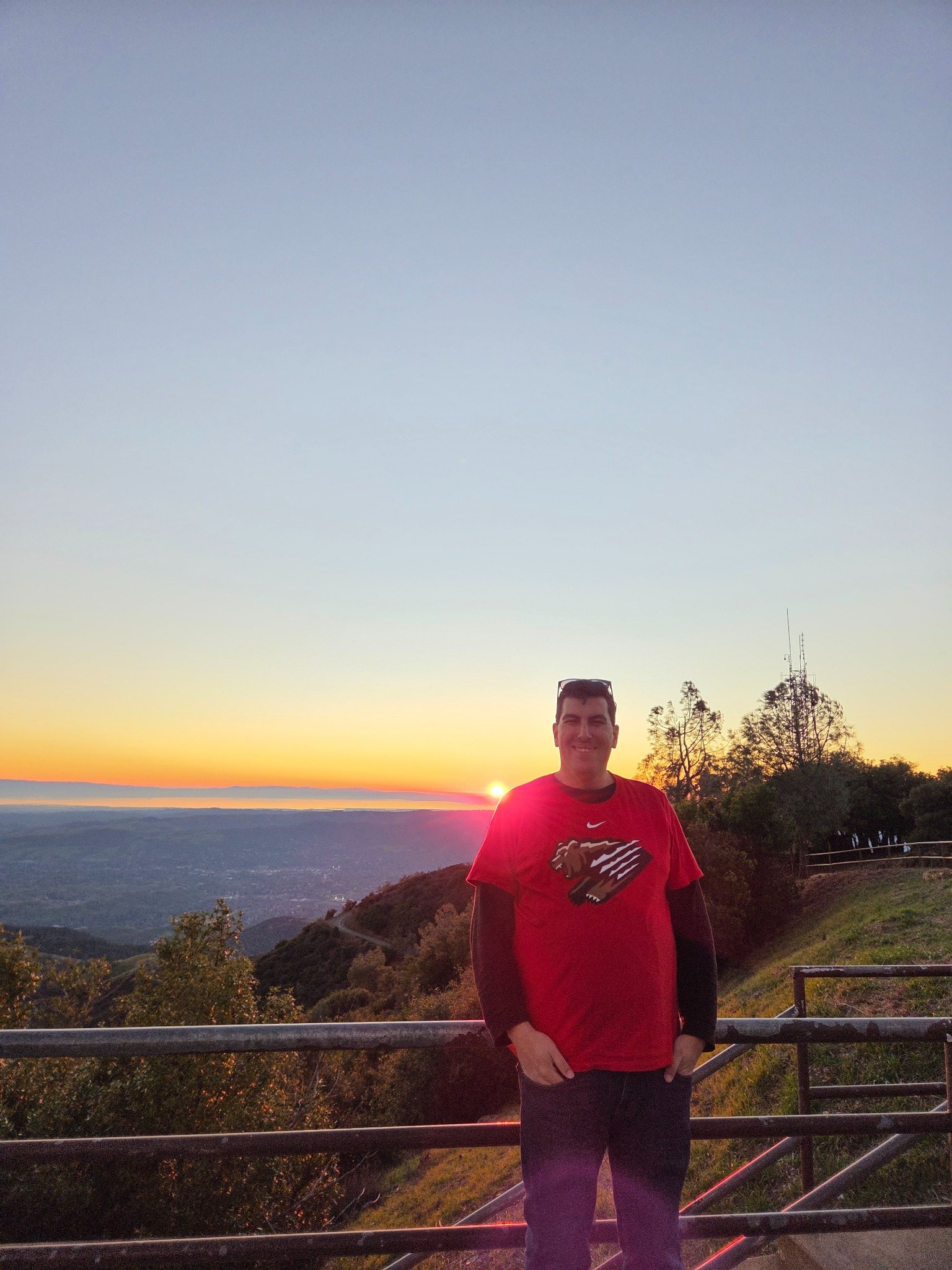
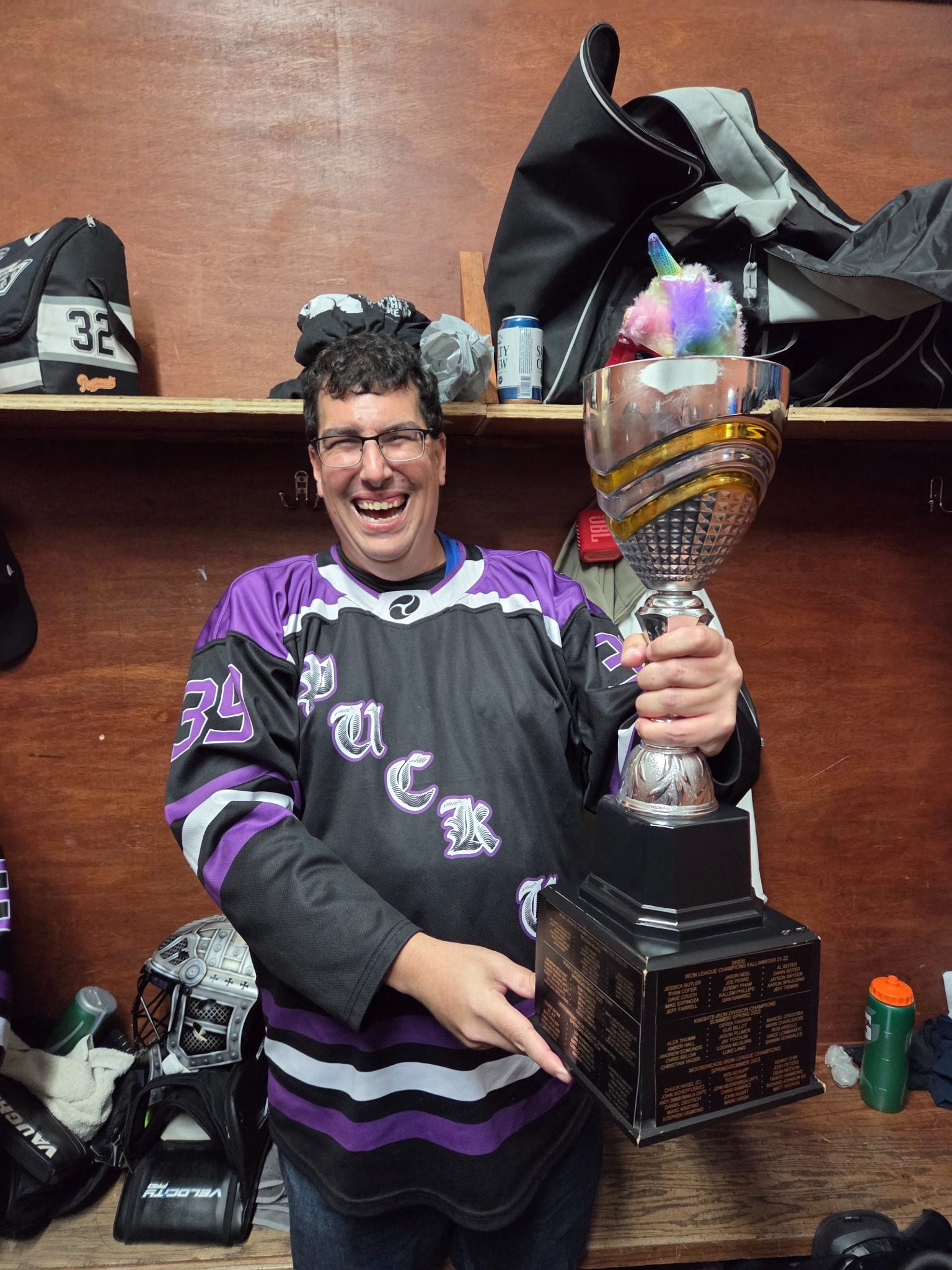
I love photography! I’ve covered professional hockey and professional baseball as a photographer for over a decade, and when I’m not at the rink or diamond, I can also be found photographing nature (sunsets over the Pacific Ocean are a favorite) and cities. My photos can be found at Flickr. I also coach a hockey team in San Diego. We play once a week and have won our league multiple times, and we’re currently (at the time of writing) in our league semifinals as we try to defend our trophy and our unicorn.