|
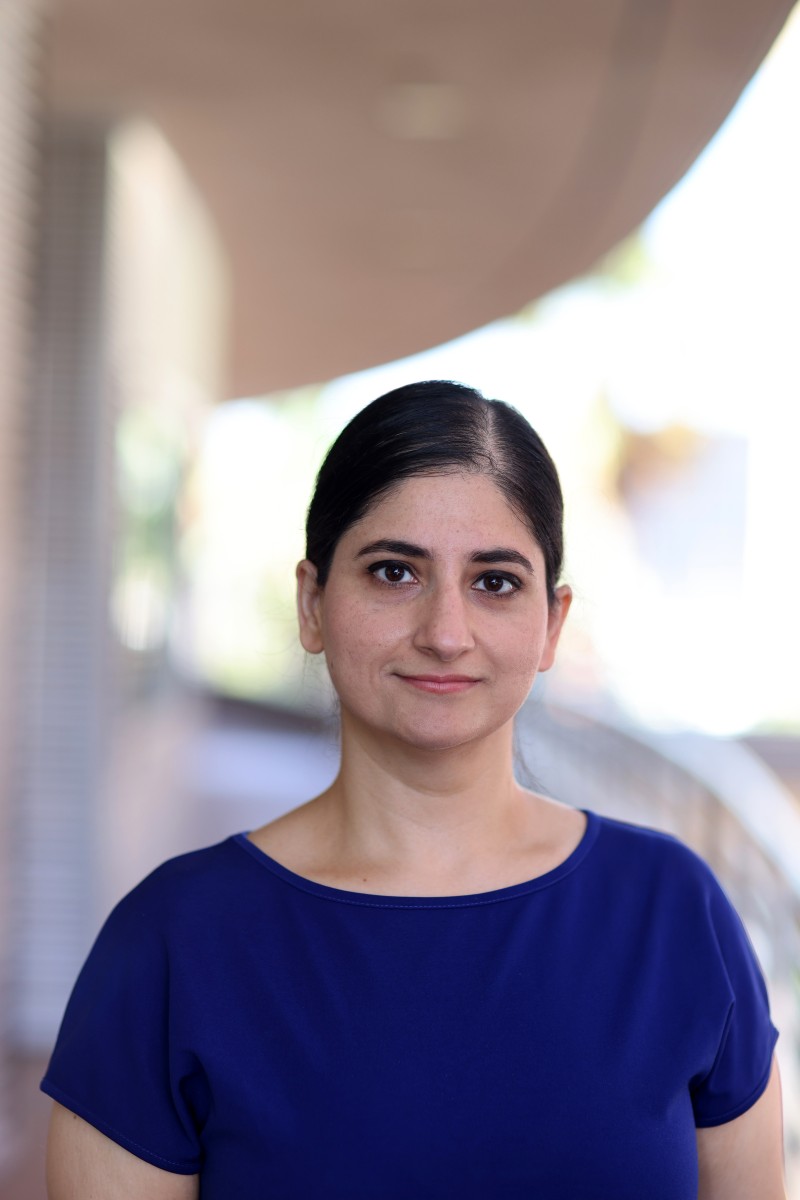
Dr. Manveen Kaur is an Assistant Professor of Computer Science at California State University, Los Angeles (Cal State LA), specializing in systems engineering and communication frameworks for wireless cyber-physical systems (CPS). Her research focuses on safety-critical systems with strict Quality-of-Service (QoS) requirements, including Unmanned Aerial Vehicle (UAV) swarms and Connected Autonomous Vehicles (CAVs). Dr. Manveen Kaur leads the Applied Research in Computing Systems (ARCS) Lab, where her group is integrating Artificial Intelligence and Machine Learning (AI/ML) models into real-world CPSs, with an emphasis on resource-constrained systems with high societal impact. This work aims to enable affordable, intelligent technologies that can be economically deployed at scale. Her research has the potential for significant societal benefits, including supporting Search and Rescue operations and advancing sustainable, CPS-driven solutions in urban environments. Dr. Manveen Kaur earned her Ph.D. in Computer Science from Clemson University in 2022. Statement on project: Reducing Urban Water Wastage Using Intelligent Leak Detection and Management. Water leakage is a major contributor to urban water loss, particularly in large metropolitan areas such as Los Angeles. While advanced sensing infrastructure is commonly deployed in high-priority segments of water distribution networks, extending similar capabilities to residential and commercial end-users remains economically infeasible. This project addresses these challenges by designing and validating an AI/ML-enabled Intelligent Water Management Solution (IWMS) capable of adaptive, data-driven leak detection and localization. Unlike existing approaches that rely on rigid thresholds or simplified control logic, the proposed system is designed to operate under heterogeneous, real-world conditions. A team of graduate and undergraduate students is conducting this work under the advisement of Drs. Kaur and Amini. The team has evaluated multiple machine learning models for detection performance and resource efficiency and is using the EPANET simulation environment to study sensor placement and system behavior under realistic hydraulic conditions. The project will transition to a physical laboratory testbed in the next phase, where insights from simulation will guide sensor deployment and system design, enabling rigorous experimental validation of the proposed AI/ML-driven IWMS. |