Ecology and Evolution
Faculty research interests in the area of ecology and evolution include conservation and evolutionary genetics (Aguilar Lab), bryophyte ecology and evolution (Fisher Lab), ontogeny and evolution of vetebrate locomotion (Heers Lab), evolutionary ecology of marine invertebrates (Krug Lab), Plant Physiology, Anatomy, Ecology, and Evoution (Scoffoni Lab), evolutionary history of marine organisms (Torres Lab), avian ecology and applied conservation (Wood Lab), and Plant Community Ecology and Ecophysiology (Wright Lab). An asterisk following a name in a publication citation indicates a student coauthor.
Evolutionary and Conservation Genomics
Contact: Andres Aguilar, Ph.D.
Office: ASCR 323E, ext: 3-2078
Laboratory: ASCB 346
E-mail: [email protected]
Web: http://andresaguilar.weebly.com
Research Summary
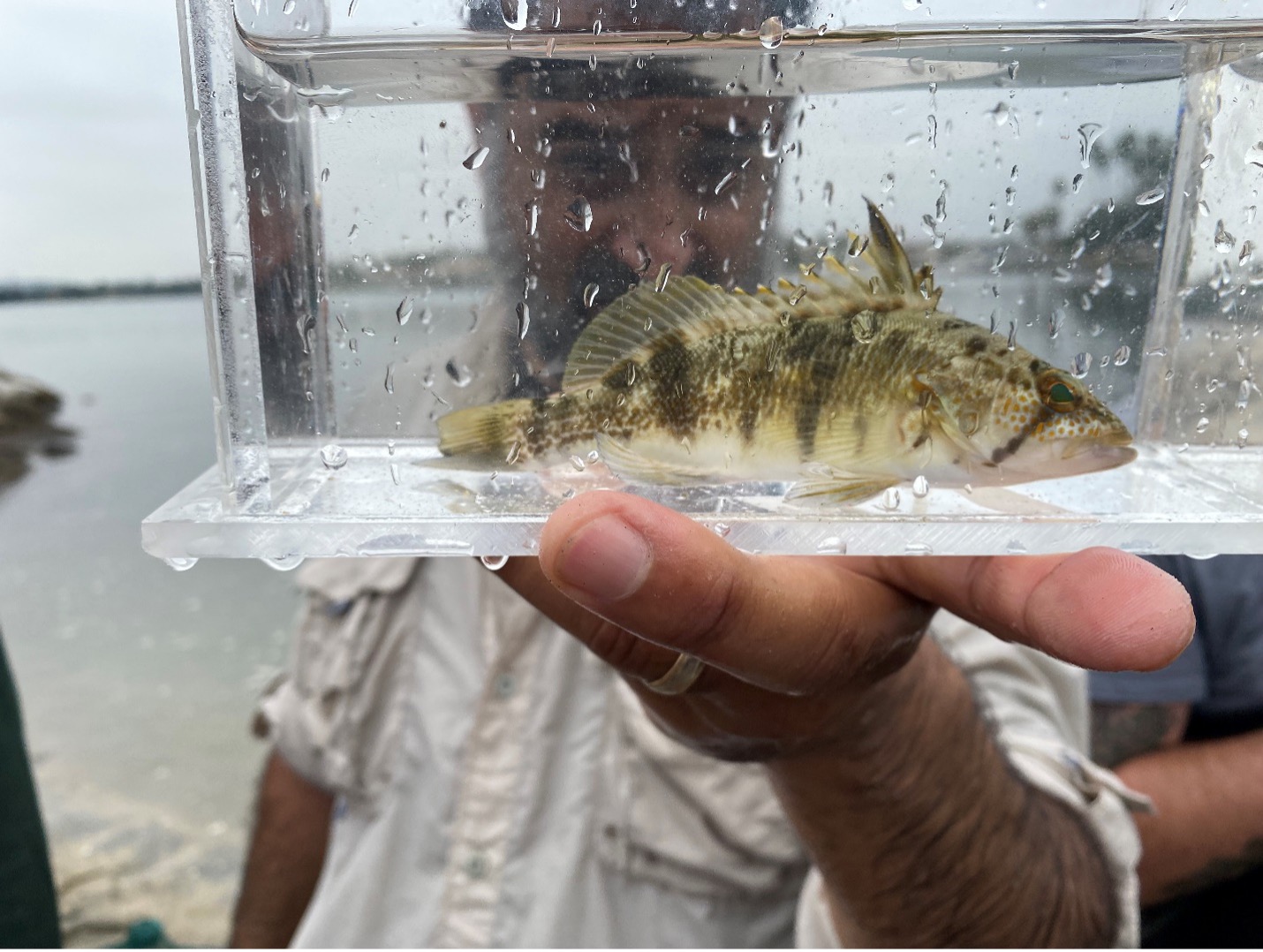
Our current work studies evolutionary, ecological and conservation based questions. We employ a variety of genomic, computational and field approaches. Major areas of study include the evolution and conservation of southern California's marine ichthyofauna and evolutionary genomic studies of diverse group of marine fishes (rockfish).
| Representative Publications |
| S.L. Drill, J. Post, R. Dagit, A. Aguilar. 2023. Ichthyofauna of the Los Angeles River. Cities and Environment (CATE): Vol 16: DOI.15365/cate.2023.160108 |
| D. Olivares Zambrano*, J. Daane, J. Hyde, M.W. Sandel, A. Aguilar. 2022. Speciation genomics and the role of depth in the divergence of rockfishes (Sebastes) revealed through Pool-seq analysis of enriched sequences. Ecology and Evolution doi.org/10.1038/s41437-022-00561.x |
| P.A. Maier, A.G. Vandergast, S.M. Ostoja, A. Aguilar, A.J. Bohonak. 2022. Landscape genetics of a sub-alpine toad: Climate change predicted to induce upward range shifts via asymmetrical migration corridors. Heredity. |
| E. Wallace, E. Reed, A. Aguilar, M. Burford-Reiskind. 2022. Resolving the phylogenetic relationship among recently diverged members of the rockfish subgenus Sebastosomus. Molecular Phylogenetics and Evolution. 173: 107515. |
| C.A. St John*, T.J. Buser, V.E. Kee, S. Kirilchik, B. Bogdanav, D. Neely, M. Sandel, A. Aguilar. 2022. Diversification along a benthic to pelagic gradient contributes to fish diversity in the world's largest lake (Lake Baikal, Russia). Molecular Ecology 31: 238-251. 10.1111/mec.16209 |
Bryophyte Ecology and Evolution
 |
Contact: Kirsten Fisher, Ph.D. Office: ASCL 393, ext: 3-2089 Laboratory: ASCL 351, ext: 3-2085 E-mail: [email protected] Web: http://instructional1.calstatela.edu/kfisher2 |
|
| Tropical moss, Calymperes tenerum, with asexual propagules. |
Research Summary
Our research interests include plant molecular systematics, phylogeography, and the use of phylogenetic trees for exploring evolutionary questions in general. In particular, we apply molecular phylogenetic methods to understanding cryptic diversity in mosses. We are investigating the potential link between physiological specialization and cryptic diversification in this group of plants, focusing on the desiccation tolerant model moss Syntrichia ruralis.
| Representative Publications |
| Fisher, K. 2011. Sex on the edge: reproductive patterns across the geographic range of the Syrrhopodon involutus (Calymperaceae) complex. The Bryologist 114: 674-685. |
| Fisher, K. 2008. Bayesian reconstruction of ancestral gene expression in the LEA families reveals propagule-derived desiccation tolerance in resurrection plants. American Journal of Botany 95: 506-515. |
| Fisher, K., Wall, D.P., Yip, K.L., and Mishler, B.D. 2007. Phylogeny of the Calymperaceae, with a rank-free systematic treatment. The Bryologist 110: 43-73. |
| Fisher, K. 2006. Rank-free monography: a practical example from the moss clade Leucophanella. Systematic Botany 31: 13-30. |
| La Farge, C., Mishler, B.D., Wheeler, J.A., Wall, D.P., Johannes, K., Schaffer, S., and Shaw, A.J. 2000. Phylogenetic relationships of the Haplolepideous mosses. The Bryologist 103: 257-276. |
Ontogeny and Evolution of Vertebrate Locomotion
| Contact: Ashley Heers, Ph.D. Office: ASCL 316, ext: 3-2072 Laboratory: ASCL 328, ext: 3-4820 E-mail: [email protected] Web: Coming soon |
||
Research Summary
Using birds and their non-avian dinosaur ancestors as a focal group, my research integrates biological, paleontological, and engineering disciplines to explore how developmental and evolutionary transformations in morphology influence(d) locomotor strategies during the invasion of new environments. The aim of this work is to elucidate the functional and ecological significance of rudimentary precursors to specialized locomotor structures — a long-standing challenge crucial to understanding major evolutionary transitions. I use an arsenal of experimental, 3D visualization, and biomechanical modeling tools to achieve these goals.
| Representative Publications |
|
Heers, A. M., Baier, D. B., Jackson, B. E., and Dial, K. P. (2016). Flapping before Flight: High Resolution, Three Dimensional Skeletal Kinematics of Wings and Legs during Avian Development. PLoS ONE 11(4), e0153446. doi:10.1371/journal.pone.0153446. |
|
Heers, A. M., and Dial, K. P. (2015). Wings versus legs in the avian bauplan: Development and evolution of alternative locomotor strategies. Evolution 69, 305-320. |
|
Heers, A. M., Dial, K. P., and Tobalske, B. W. (2014). From baby birds to feathered dinosaurs: incipient wings and the evolution of flight. Paleobiology 40, 459-476. |
|
Heers, A. M., and Dial, K. P. (2012). From extant to extinct: locomotor ontogeny and the evolution of avian flight. Trends in Ecology and Evolution 27, 296-305. |
|
Heers, A. M., Tobalske, B. W., and Dial, K. P. (2011). Ontogeny of lift and drag production in ground birds. Journal of Experimental Biology 214, 717-725. |
Evolutionary Ecology of Marine Invertebrates
Contact: Patrick Krug, Ph.D.
Office: ASCL 314, ext: 3-2076
Laboratory: ASCL 325, ext: 3-2098
E-mail: [email protected]
Web: https://patkrug70.wixsite.com/website
Research Summary
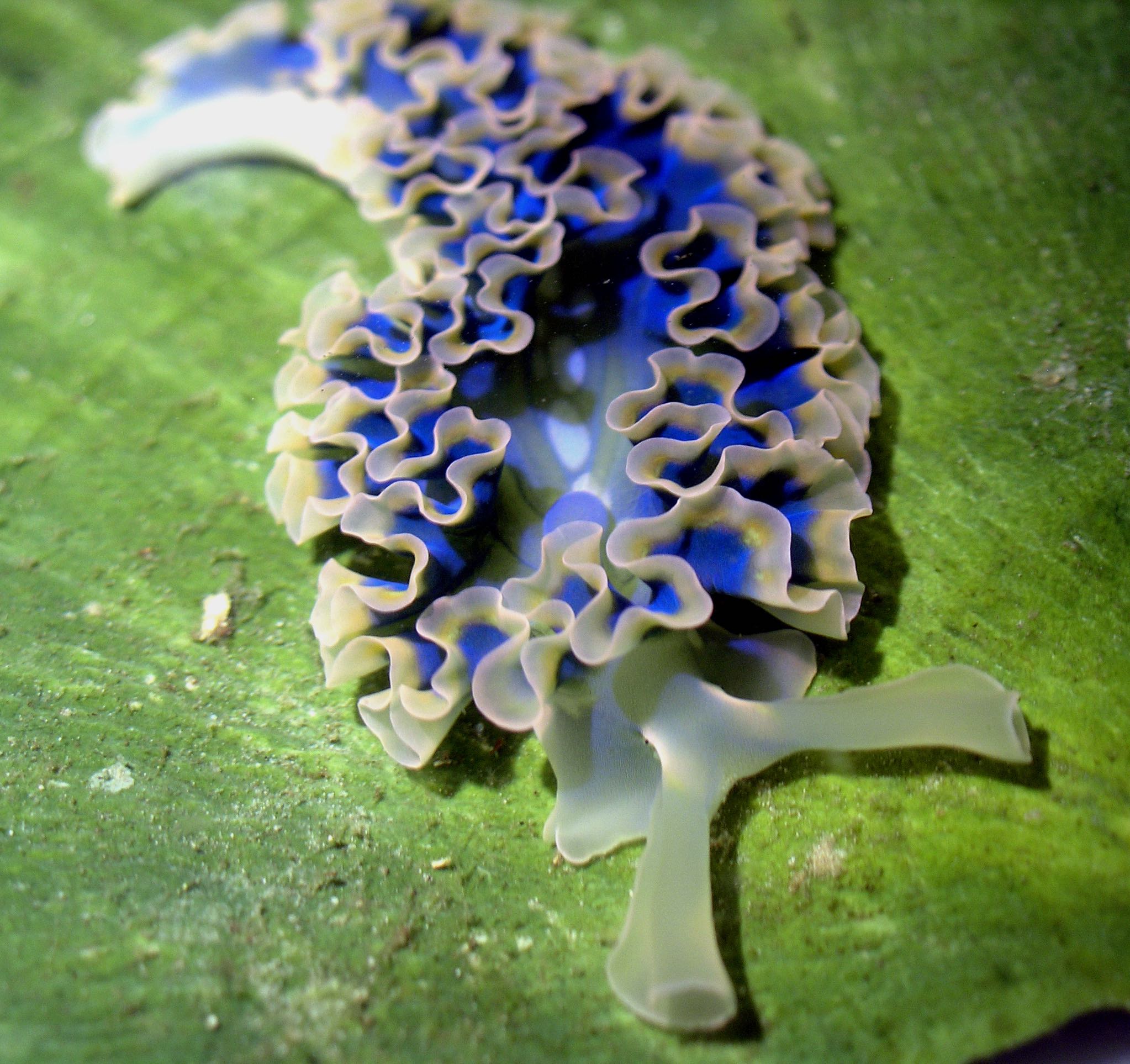
Our lab studies marine ecology and evolution to understand how species interact at different time scales. We are investigating how chemicals in abundant sea slugs alter food webs by deterring predators, and change ecosystem function through indirect effects on the mudflat community. With genomic techniques, we are building a phylogeny of sea slugs and related groups, and studying how animals evolve to be photosynthetic. Tropical biodiversity is badly underestimated, so we also engage in species discovery; we have named over 50 new species using DNA sequencing, anatomical and ecological data, including one of the Top 10 new marine species of 2019, and a new genus of algae-mimics recently profiled in National Geographic.
| Representative Publications |
| Moreno*, K., Rico, D.M.*, Middlebrooks, M., Medrano*, S., Valdés, Á.A., and P.J. Krug. 2023. A cryptic radiation of Caribbean sea slugs: integrative analysis indicates Cyerce ‘antillensis’ (Sacoglossa: Caliphyllidae) is six species. Zoological Journal of the Linnean Society, zlad111 |
| Li, F., Lin, Z., Krug, P.J, Catrow, J.L., Cox, J.E., and E.W. Schmidt. 2023. Animal FAS-like polyketide synthases produce diverse polypropionates. Proceedings of the National Academy of Sciences USA, 120: e2305575120. (https://doi.org/10.1073/pnas.2305575120). |
| Rodriguez*, A. K. and P.J. Krug. 2022. Ecological speciation by sympatric host shifts in a clade of herbivorous sea slugs, with introgression and localized mitochondrial capture between species. Molecular Phylogenetics & Evolution, 174:107523. (https://doi.org/10.1016/j.ympev.2022.107523). |
| Krug, P.J, Caplins, S.A., Algoso*, K., Thomas*, K., Valdés, Á.A., Wade, R., Wong, N.L., Eernisse, D.J., and K.M. Kocot. 2022. Phylogenomic resolution of the root of Panpulmonata, a hyperdiverse radiation of gastropods: new insight into the evolution of air breathing. Proceedings of the Royal Society B: Biological Sciences, 289: 20211855. (https://doi.org/10.1098/rspb.2021.1855) |
| Krug, P.J., Wong, N.L., Medina*, M., Gosliner, T.M., and A.A. Valdés. 2018. Cryptic speciation yields remarkable mimics: a new genus of sea slugs that masquerade as toxic algae (Caulerpa spp.) Zoologica Scripta, 47: 699–713. |
Plant Physiology, Anatomy, Ecology, and Evolution
|
Contact: Christine Scoffoni, Ph.D. Office: ASCB 323A, ext: 3-2070 Laboratory: ASCB 341 E-mail: [email protected] Web: https://christinescoffoni.wordpress.com/ |
|
|
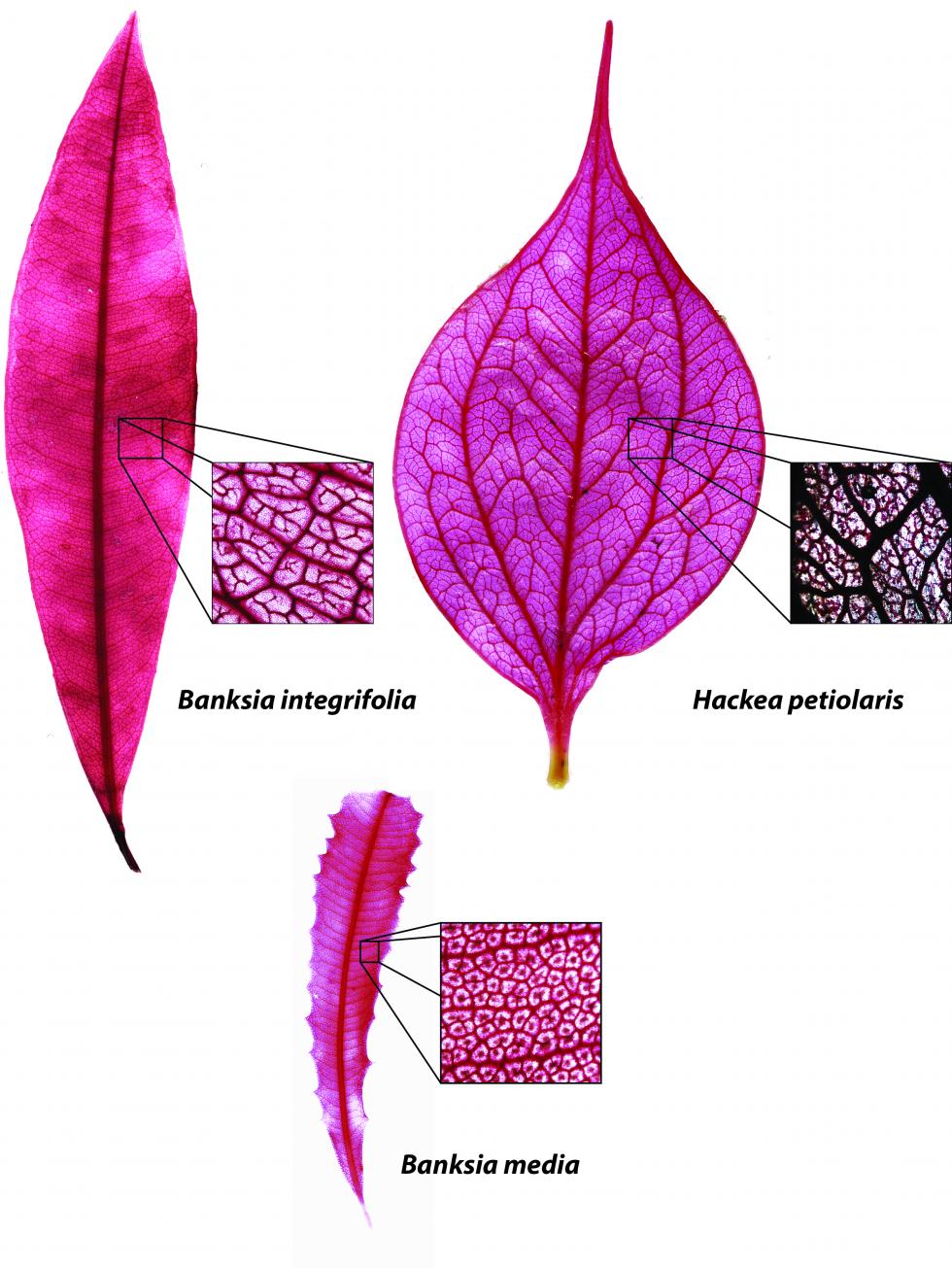
The puzzling fact about leaf veins is that even though they serve similar functions across all plant species (water and sugar transport, leaf mechanical support), they have evolved widely different architectures and anatomies, even within closely related species such as these three Proteaceae. We are investigating the function behind this surprising diversity. |
Research Summary
Our research uses experimental and comparative approaches in plant physiology, ecology and evolution to answer fundamental questions regarding the function of plant diversity with an emphasis on plant’s adaptation to environmental stresses such as drought. More specifically, why do species exhibit such diversity in leaf size, shape and venation architecture? What are the physiological and anatomical traits that drive species’ resistance to drought? We work on a broad range of questions relating to plant hydraulics and leaf venation architecture, species adaptation to drought, and to the evolution of plant traits.
| Representative Publications |
|
Scoffoni C, Sack L. 2017. Darwin Review. The causes and consequences of leaf hydraulic decline with dehydration. Journal of Experimental Botany, in press (doi.org/10.1093/jxb/erx252). |
|
John GP, Scoffoni C, Buckley TN, Villar R, Poorter H, Sack L. 2017. The anatomical and compositional basis of leaf mass per area. Ecology Letters, 20: 412-425. |
|
Scoffoni C, Albuquerque C, Brodersen C, Townes S*, John GP, Bartlett MK, Buckley TN, McElrone AJ, Sack L. 2017. Outside-xylem vulnerability, not xylem embolism, controls leaf hydraulic decline during dehydration. Plant Physiology, 173: 1197-1210. |
|
Scoffoni C, Chatelet D, Pasquet-Kok J*, Rawls M*, Donoghue M, Edwards E, Sack L. 2016. Hydraulic basis for the evolution of photosynthetic productivity. Nature Plants. 16072. |
|
Scoffoni C, Kunkle J, Pasquet-Kok J*, Vuong C*, Patel AJ*, Montgomery R, Givnish TJ, Sack L. 2015. Light induced plasticity in leaf hydraulics, anatomy and gas exchange in ecologically diverse Hawaiian lobeliads. New Phytologist. 207: 43-58. |
|
Scoffoni C, Vuong C*, Diep S*, Cochard H, Sack L. 2014. Leaf shrinkage with dehydration: coordination with hydraulic vulnerability and drought tolerance. Plant Physiology.164: 1772-1788. |
|
Sack L, Scoffoni C. 2013. Tansley Review. Leaf venation: structure, function, development, evolution, ecology and applications in past, present and future. New Phytologist. 198: 983-1000. |
|
Sack L, Scoffoni C, McKown AD, Frole K, Rawls M*, Havran JC, Tran H, Tran S. 2012. Developmentally-based scaling laws for leaf venation architecture explain global patterns. Nature communications. 3: 837. |
|
Bartlett MK, Scoffoni C, Sack L. 2012. The determinants of leaf turgor loss point and prediction of drought tolerance of species and biomes: a global meta-analysis. Ecology Letters. 15: 393-405. |
|
Scoffoni C, Rawls M*, McKown A, Cochard H, Sack L. 2011. Decline of leaf hydraulic conductance with dehydration: relationship to leaf size and venation architecture. Plant Physiology 156: 832-843. |
Taxonomy & Evolution of Marine Ostracods
|
Contact: Elizabeth Torres, Ph.D. Office: ASCL 313, ext: 3-2179 Laboratory: ASCL 311, ext: 3-5856 E-mail: [email protected] |
|
| Vargula tsujii is a cypridinid ostracod crustacean that lives off of the Pacific Coast of North America. It secretes a bright blue luminescence produced in the light organ (yellow vertical bar just below the compound eye). |
Research Summary
We use molecular methods and classic taxonomic approaches to understand phylogeny, diversity, and speciation in Caribbean cypridinid ostracode crustaceans. We are especially interested in the evolution of bioluminescence in cypridinids. Our genetic data have revealed several new species in the Caribbean, which we are in the process of describing. Students in our lab have also worked on other taxa, such as butterflies, Channel Island foxes, fox squirrels, marine snails, and bioluminescent fish.
| Representative Publications |
|
Ellis EA, Goodheart, J.A, Hensley NM, Gonzalez V.L, Reda N.J, Rivers TJ, Morin J.G., Torres E., Gerrish GA, Oakley TH. 2022. Sexual signals persist over deep time: ancient co-option of bioluminescence for courtship displays in cypridinid ostracods. Systematic Biology. https://doi.org/10.1093/sysbio/syac057 |
| Hensley NM, Ellis EA, Leung NY, Coupart J, Mikhailovsky A, Taketa DA, Tessler M, Gruber DF, De Tomaso AW, Mitani Y, Rivers TJ, Gerrish GA, Torres E, Oakley TH. 2021. Selection, drift, and constraint in cypridinid luciferases and the diversification of bioluminescent signals in sea fireflies. Mol Ecol. 30: 1864– 1879. https://doi.org/10.1111/mec.15673 |
|
Goodheart, J.A., Minsky, G., Brynjegard-Bialik, M.N. Drummond, M. S., Munoz, J.D*., Fallon, T. R., Schultz, D. T., Weng, J., Torres, E., & Oakley, T. H. 2020. Laboratory culture of the California Sea Firefly Vargula tsujii (Ostracoda: Cypridinidae): Developing a model system for the evolution of marine bioluminescence. Sci Rep 10, 10443. |
| Reda, N.J., Morin, J. G.; Torres, E.; Cohen, A. C.; Schawaroch, V.; Gerrish, G. A. 2019. Maristella, a new bioluminescent ostracod genus in the Myodocopida (Cypridinidae). Zoological Journal of the Linnean Society 187(4):1078-1118. |
Avian Ecology and Conservation
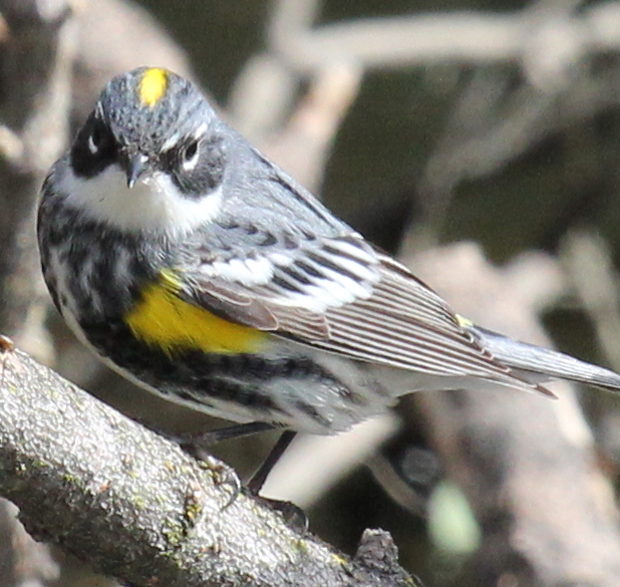
|
Contact: Eric Wood, Ph.D. Office: ASCL 312, ext: 3-2055 Laboratory: ASCB 310 E-mail: [email protected] Web: http://www.ericmwood.org |
|
| The Yellow-rumped Warbler (Setophaga coronata) is a migratory songbird that uses lowland areas throughout the Los Angeles region during the wintering period and migration. Yellow-rumped Warblers are an excellent study species for understanding the impacts of urbanization on biodiversity as well as the effects of climate change and extreme weather on phenological relationships between birds and their seasonal food resources. |
Research Summary
We work to understand the impacts of global and environmental change on biodiversity with a focus on applied conservation. Our research is centered on terrestrial ecosystems and avian communities, and we use field and citizen science data, spatial analyses, and quantitative approaches to explore processes and patterns for pressing conservation issues. We strive to work with a wide range of partners; including government agencies, NGOs, and community members to link scientific outcomes with conservation applications.
| Representative Publications |
| Wood, E. M. and A. M. Pidgeon. Extreme variations in spring temperature affect ecosystem regulating services provided by birds during migration. in press Ecosphere |
| Wood, E. M. and J. L. Kellerman, Editors. Studies in Avian Biology (no. 47). 2015. ‘Phenological synchrony and bird migration: changing climate and seasonal resources in North America’ |
| Wood, E. M., A. M. Pidgeon, V. C. Radeloff, P. D. Culbert, N. S. Keuler, and C. H. Flather. 2015. Long-term avian community response to housing development at the boundary of U.S. protected areas: effect size increases with time. Journal of Applied Ecology 52:1227-1236 |
| Wood, E. M., A. M. Pidgeon, V. C. Radeloff, D. Helmers, P. D. Culbert, N. S. Keuler, and C. H. Flather. 2014. Housing development erodes avian community structure in U.S protected areas. Ecological Applications 24:1445-1462 |
| Wood, E. M., A. M. Pidgeon, D. J. Mladenoff, and F. Liu. 2012. Birds see the trees inside the forest: the potential impacts of changes in forest composition on songbirds during spring migration. Forest Ecology and Management 280:176-186. |
Plant Community Ecology, Ecophysiology
|
|
Contact: Alexandra Wright Ph.D. Office: ASCL 315, ext: 3-2065 Laboratory: ASCL 327 E-mail: [email protected] Web: https://sashajwright.wordpress.com |
|

Research Summary
Our lab focuses on the relationship between biodiversity and ecosystem function. Higher biodiversity plant communities tend to be more productive and more stable than lower diversity plant communities. This can mean increased yield in an agricultural context, and increased stability in the face of a rapidly changing climate. We explore the mechanisms that help explain positive biodiversity effects: why/how do plants sometimes benefit their neighbors? We also explore how these effects change at different spatial scales and in different types of environments (urban, arid, heavily managed agricultural environments, etc).
Representative Publications |
|
Wright, A., de Kroon, H., Visser, E.J.W., Buchmann, T., Ebeling, A., Eisenhauer, N., Fischer, C., Hildebrandt, A., Ravenek, J., Roscher, C., Weigelt, A., Weisser, W., Voesenek, L.A.C.J., Mommer, L. 2017. Plants are less negatively affected by flooding when growing in species-rich plant communities. New Phytologist 213(2): 645-656.
|
|
Wright, A., Gaxiola, A., Wardle, D., Callaway, R. 2017. The overlooked role of facilitation in biodiversity experiments. Trends in Ecology and Evolution 32(5): 383-390. |
|
Wright, A., Ebeling, A., de Kroon, H., Roscher, C., Weigelt, A., Buchmann, N., Buchmann, T., Fischer, C., Hacker, N., Hildebrandt, A., Oelmann, Y., Steinauer, K., Weisser, W., and Eisenhauer, N. 2015. Flooding disturbances increase resource availability and productivity but reduce stability in diverse plant communities. Nature Communications 6: 6092. |
|
Wright, A., Schnitzer, S.A., and Reich, P.B. 2015. Daily environmental conditions determine the competition-facilitation balance for plant water status. Journal of Ecology 103(3): 648-656. |
|
Wright, A., Schnitzer, S.A., and Reich, P.B. 2014. Living close to your neighbors – the importance of both facilitation and competition in plant communities. Ecology 95: 2213-2223. |
Note: ADM = Administration Building, ASCL = Wallis Annenberg Integrated Science Complex-Wing A (La Kretz Hall), ASCB = Wallis Annenberg Integrated Science Complex-Wing B. When calling from off-campus, the area code and prefix for all telephone extensions is (323) 34X-XXXX